
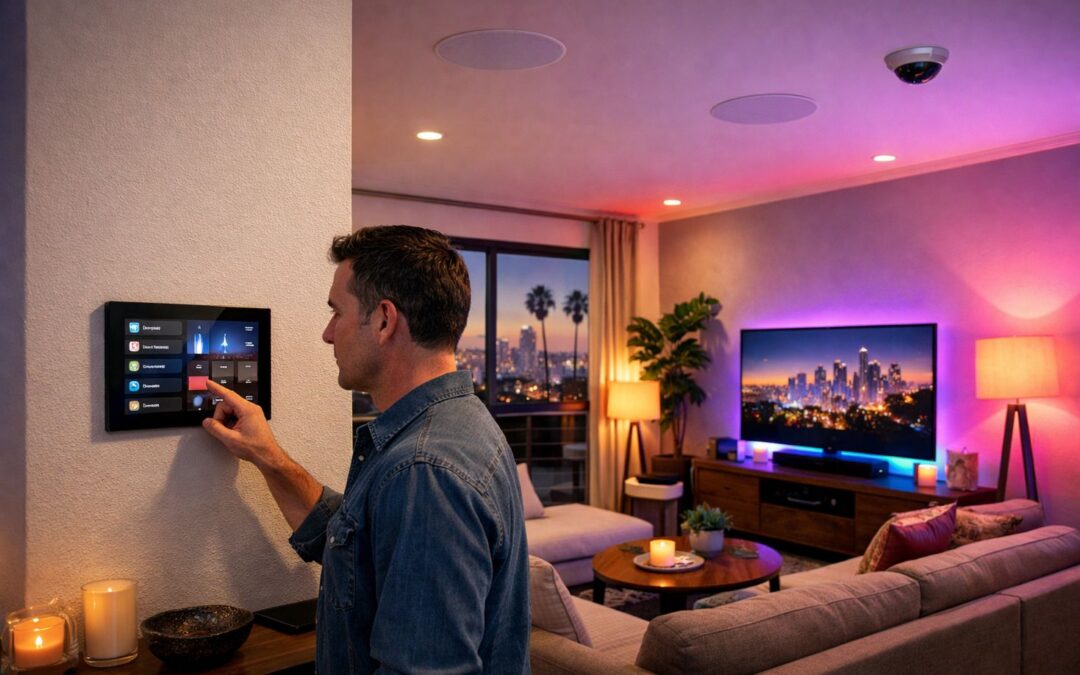
A smart home ecosystem is the connected framework that lets your lights, speakers, thermostat, cameras, and locks work together instead of acting like separate gadgets. If you have ever wanted your home to dim the lights, start music, adjust the temperature, and arm security with a single command, this is the system that makes it possible. For homeowners exploring connected technology, the real value is not just buying smart devices, but choosing a setup that stays easy to control, compatible over time, and useful in everyday life.
This guide focuses on smart home ecosystems as a whole, not just individual products. That means looking at how devices communicate, how apps and hubs fit in, and how automation routines turn simple controls into practical convenience. It also means thinking ahead so your setup can grow without becoming confusing or unreliable.
What this guide covers
You will learn the key parts of a connected home system, including devices, hubs, apps, automations, security features, and the network behind it all. We will also cover compatibility, control options, and planning tips so you can build a smart home ecosystem that fits your home now and still makes sense later.
What Is a Smart Home Ecosystem?
A smart home ecosystem is a connected system of devices, software, and automations that work together through one coordinated setup rather than acting as separate gadgets. Instead of controlling lights, climate, audio, and security through different apps with inconsistent performance, an ecosystem brings those functions into one reliable smart home automation experience.
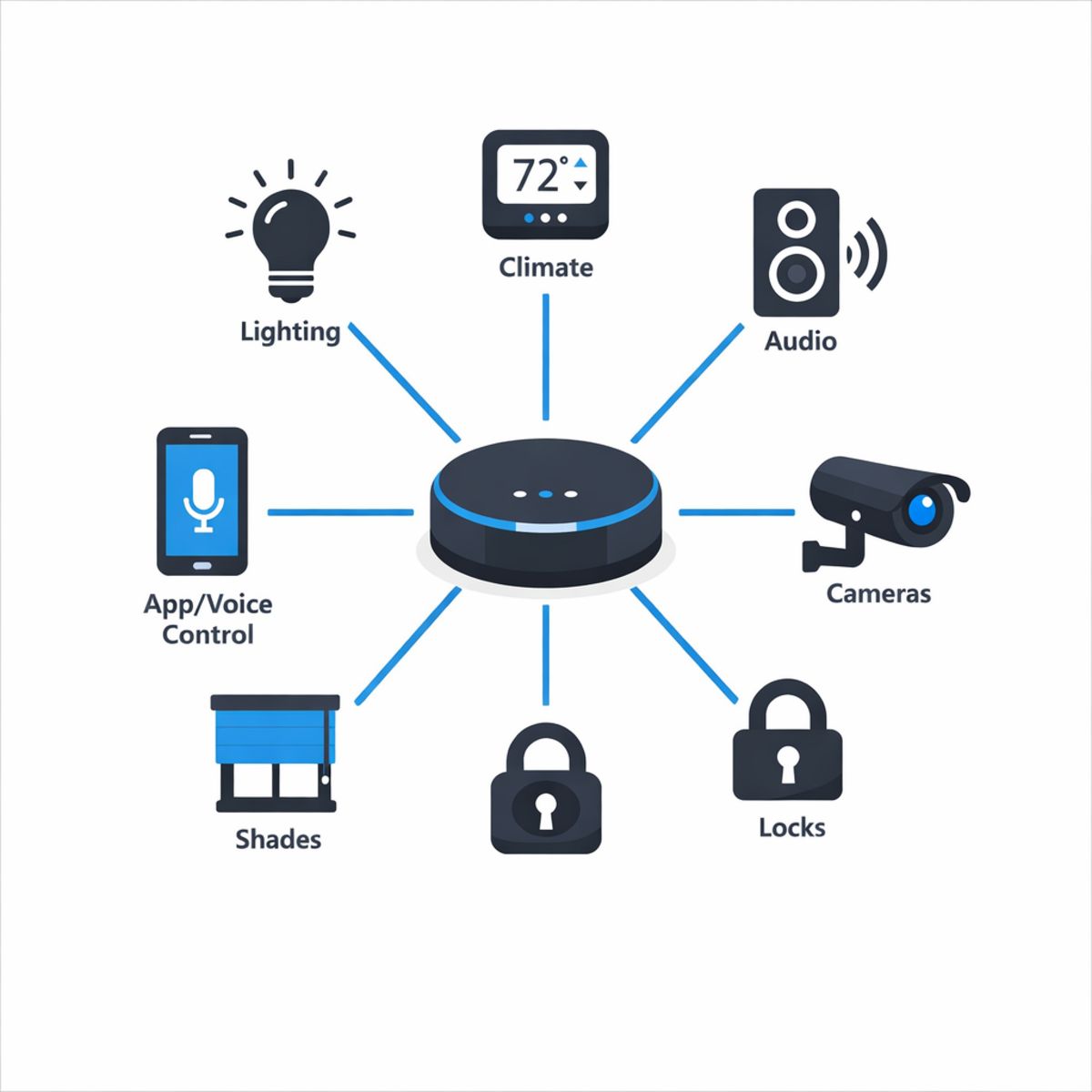
In plain terms, the ecosystem includes the hardware you use every day, the software that manages it, the network connectivity that keeps everything online, and the control logic that tells devices how to respond. That can include smart home devices such as lighting, thermostats, speakers, door locks, cameras, and shades, along with sensors, voice assistants, a smart home app, and often a smart home hub that helps everything communicate more smoothly.
The best systems are designed for interoperability and reliability. That means your lighting can respond to motion, your climate settings can adjust by schedule, your audio can follow room-by-room preferences, and your security system can trigger alerts or scenes automatically. Well-planned custom home automation systems for modern living focus on making all these parts feel unified, simple, and dependable.
The core parts of an ecosystem
Most ecosystems are built around five essentials: devices, control interfaces, network connections, automation rules, and integrations. Devices do the work, interfaces let you manage them, the network keeps them connected, automations create hands-free convenience, and integrations allow multiple brands or systems to work together in one place.
Ecosystem vs. standalone gadgets
A few smart products do not automatically create a true ecosystem. If each product runs on its own app and cannot share triggers, schedules, or scenes, the result is usually more complexity, not less. A real ecosystem delivers centralized control, consistent behavior, and a smoother daily experience across the whole home.
Why a Unified Ecosystem Matters
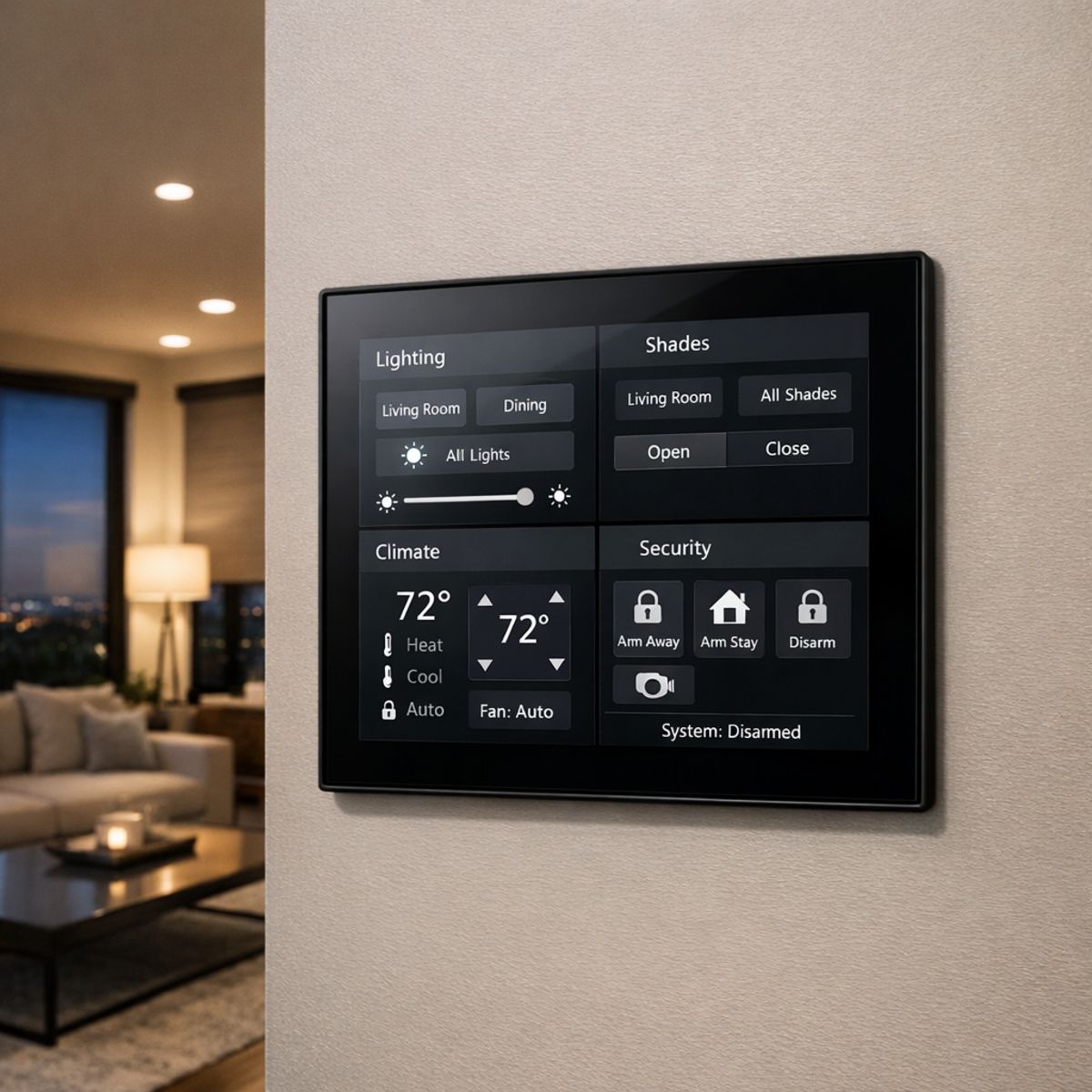
A unified smart home ecosystem makes daily life feel simpler, faster, and more reliable. Instead of juggling separate apps, voice assistants, and disconnected devices, you get one place to control lighting, climate, shades, audio, locks, and more. That means fewer compatibility headaches, smoother automation, and a better overall experience for everyone in the home.
Everyday convenience and control
The biggest benefit is less friction. With one-app control, you can create scenes and routines that match real life: a bedtime scene that turns off lights, lowers shades, locks doors, and adjusts the thermostat, or an arrival routine that welcomes you home with the right lighting and music. Remote access also makes it easier to check cameras, manage comfort settings, and support smart home security from anywhere. When systems work together, the home feels more intuitive instead of more complicated.
Long-term flexibility and value
A well-planned ecosystem also supports growth. If you want to add professional security camera installation for integration now and expand into whole-home audio or home theater installation within a unified system later, integration makes those upgrades easier. You avoid building a collection of isolated products that do not communicate well with each other. Over time, that means cleaner control, better reliability, and a system that can scale with your needs, whether your priorities are energy management, comfort, entertainment, or peace of mind.
Thoughtful planning helps turn smart devices into a cohesive smart home. The result is not just more technology, but a more polished and dependable lifestyle experience.
How a Smart Home Ecosystem Works
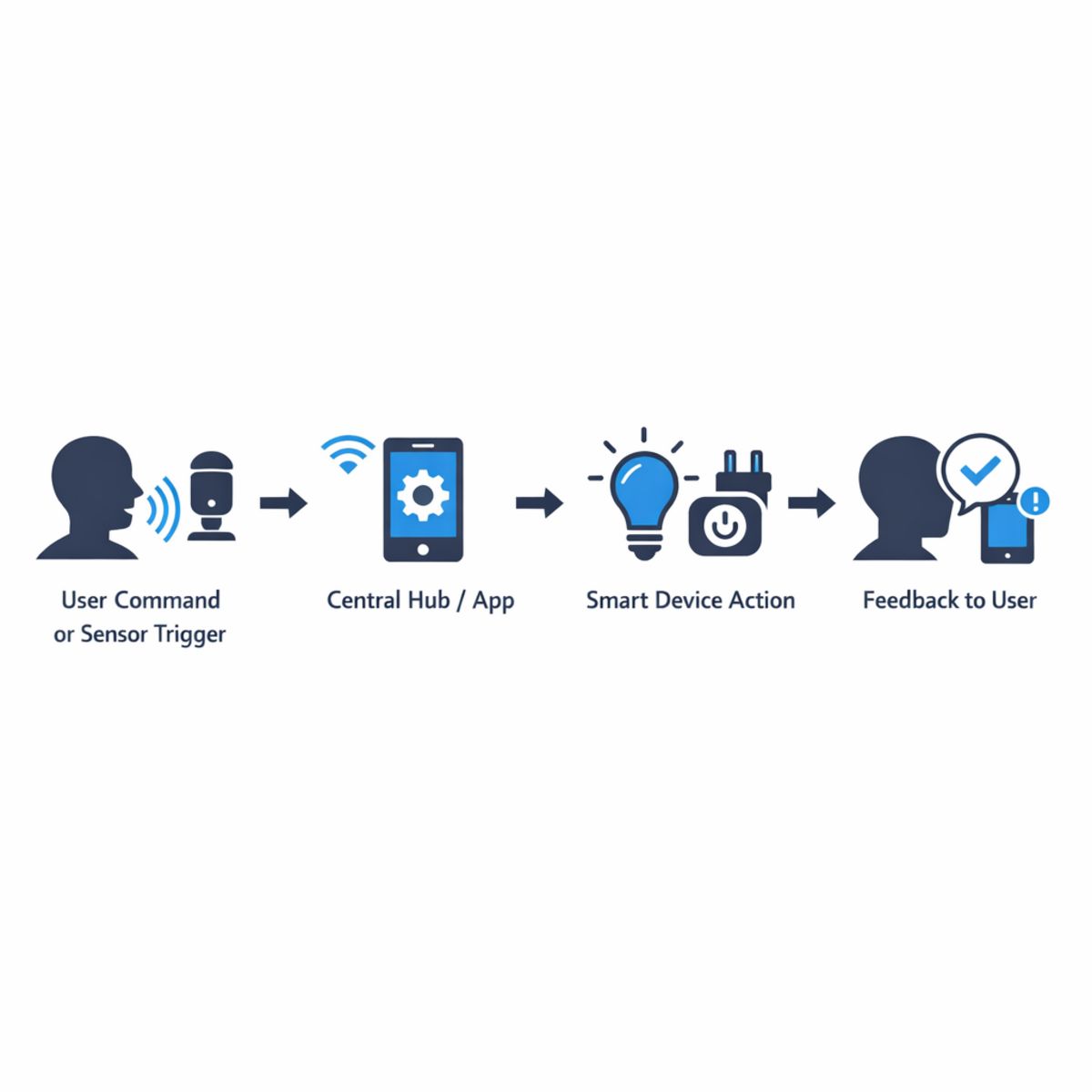
A smart home ecosystem works by taking a trigger, sending that information through the right control path, and telling the correct device how to respond. That trigger might come from a mobile app, a voice assistant, a wall keypad, a motion sensor, or a scheduled routine. The goal is simple: make devices communicate clearly so the system can automate actions without adding complexity for the homeowner.
In many setups, a smart home hub acts like the coordinator. Instead of every device operating on its own, the hub helps different products work together, even when they use different brands or communication methods. For example, a sensor can detect motion, the hub can process that trigger, and the lighting system can respond by turning on a pathway scene. At the same time, the app can show status updates so you know the command was completed.
Ways to control the system
Good ecosystems support multiple ways to control the home. You might tap a button in an app, speak a voice command, use a handheld remote, press a keypad, or let a sensor trigger an action automatically. This flexibility matters because the best systems let you choose the easiest method in the moment while keeping the experience consistent across the house.
How automations actually happen
Automation logic usually follows a simple pattern: when something happens, the system responds. If sunset arrives, lights can dim. If everyone leaves, doors can lock and the thermostat can adjust. If occupancy is detected in a hallway at night, low-level lights can turn on. Scenes, schedules, geofencing, and sensor-based rules all help the system automate useful responses without requiring constant manual input.
Why the network matters
Even premium devices depend on strong connectivity. If the network is inconsistent, commands may lag, automations may fail, and trust in the system drops quickly. That is why whole-home WiFi networking for reliable automation is such an important part of performance. A well-designed network helps devices communicate faster, respond more reliably, and deliver the seamless experience people expect from a connected home.
Popular Ecosystem Approaches: DIY vs. Professionally Designed
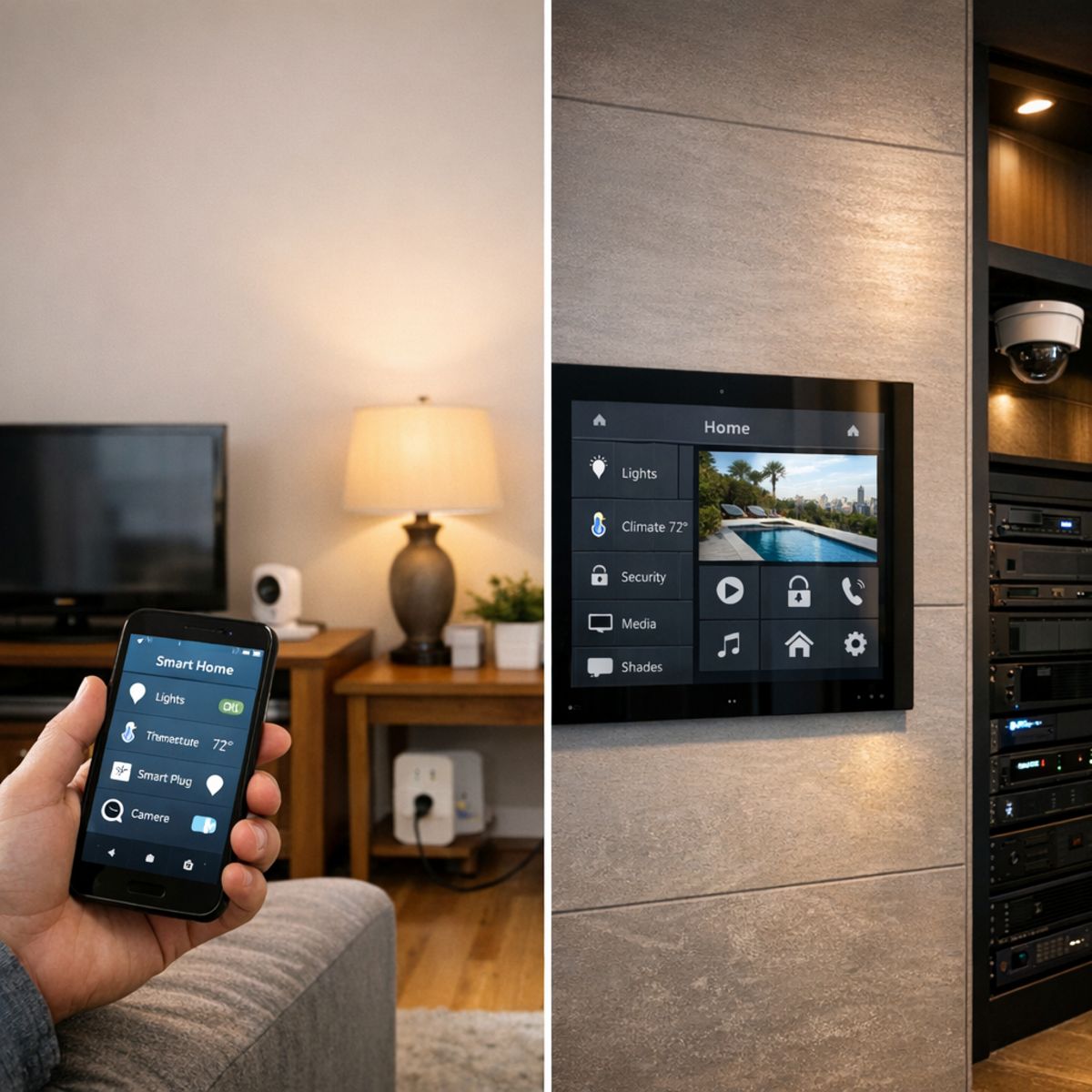
There is no single best way to build a smart home ecosystem. For some households, a few app-based devices are enough to handle lighting, video doorbells, or a thermostat. For others, especially larger homes or projects involving multiple systems, a more coordinated plan delivers better long-term results. The right choice usually comes down to convenience, customization, reliability, and the level of support you want.
DIY platforms often appeal to people who want flexibility and a lower starting cost. They can work well for apartments, single-room upgrades, or anyone who enjoys experimenting with smart home products over time. Setup is usually fast, and adding a few devices can be a practical way to learn what features you actually use before making a bigger investment.
When DIY makes sense
DIY is often a strong fit when your goals are simple: control a few lights, add voice commands, automate one room, or stay within a tighter budget. It can also be ideal if you do not mind managing multiple apps, occasional troubleshooting, or the trial-and-error that sometimes comes with mixing devices from different manufacturers.
When professional design makes sense
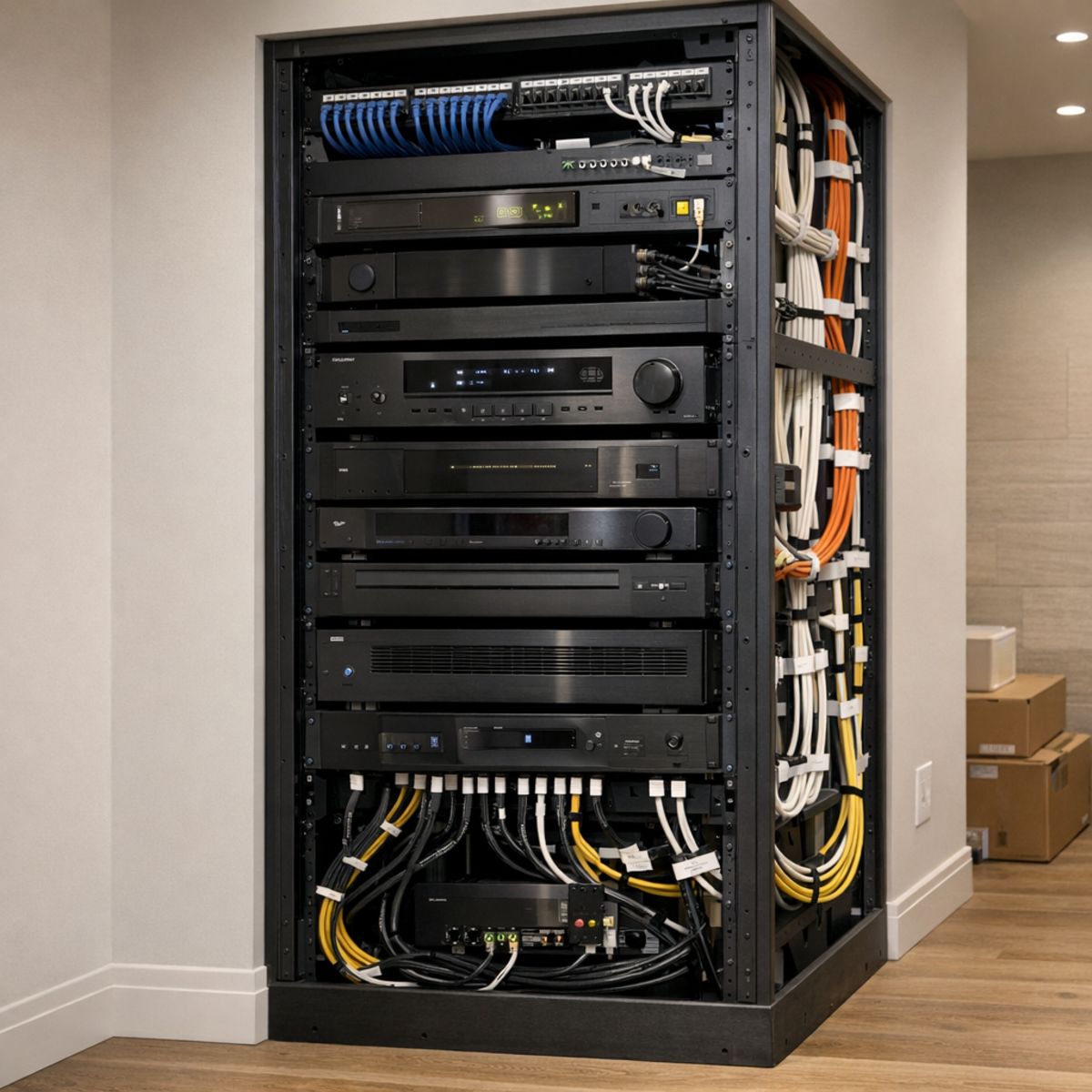
Professional design becomes more valuable when you want a cleaner, more unified experience across lighting, shades, audio, security, climate, and networking. Larger homes, multi-room audio, lighting scenes, and hidden infrastructure often benefit from expert planning, programming, and ongoing support. Premium ecosystems can offer a more polished result, especially when installed as part of professional home automation design and integration, where the goal is to make technology feel simple instead of complicated.
In short, DIY can be excellent for smaller needs, while professionally integrated systems tend to make more sense when reliability, scale, and ease of use matter most. Choosing the best fit starts with being honest about your goals and how much complexity you want to manage yourself.
How to Plan the Right Smart Home Ecosystem
The best smart home setup starts with a plan, not a pile of devices. If you want a connected home that feels simple and reliable, begin with your daily routines, then build around compatibility, networking, and long-term growth. Thoughtful home automation planning for a seamless ecosystem helps you avoid app overload, weak performance, and expensive do-overs.
1. Start with the rooms and routines that matter most
List your top priorities first: lighting, security, climate, entertainment, or whole-home control. Then identify where those needs show up most often. For example, you may want easier lighting scenes in the kitchen, better security around entry points, or simpler TV and audio control in the family room. This keeps your smart home ecosystem focused on real lifestyle benefits instead of unnecessary gadgets.
2. Check compatibility before buying devices
Before purchasing anything, decide how you want to control the system. Some homes do well with a single app and voice control, while others benefit from a dedicated smart home hub for deeper automation. Choosing an ecosystem first helps reduce app clutter and lowers the risk of devices that do not work well together. A connected home system should feel unified, not patched together.
3. Build on a strong network foundation
Even the best smart home devices depend on solid WiFi coverage, enough bandwidth, and reliable performance across the property. Audit signal strength, device density, power locations, and any wiring that may support access points, cameras, or AV equipment. In larger homes, professional networking can make a major difference in stability and responsiveness, especially as more devices come online.
4. Plan for future expansion
Create a phased roadmap so you can install in stages without limiting future upgrades. You might start with lighting and security, then add shades, climate control, and entertainment later. Planning ahead protects your investment, supports cleaner installation, and makes it easier to scale your smart home ecosystem as your needs grow.
Common Smart Home Ecosystem Mistakes to Avoid
Quick pitfalls checklist
- Buying incompatible devices: Check platform support first so your smart home ecosystem works together from day one.
- Overlooking Wi-Fi strength: Weak coverage can cause delays and dropouts, so plan router placement or mesh coverage early.
- Using too many apps: Choose products that consolidate control to keep daily use simple and reliable.
- Skipping future planning: Leave room for added lighting, locks, cameras, or voice control as your needs grow.
- Ignoring privacy settings: Review permissions and account options so connected devices match your comfort level.
- Forgetting updates: Regular firmware updates help maintain performance, compatibility, and security across your home automation setup.
Frequently Asked Questions
Do I need a smart home hub for every smart home ecosystem?
No. Some devices connect directly through their own apps or a shared platform, while others work better with a hub. A hub can make automation, device coordination, and whole-home control simpler when you have a larger setup.
Can different smart home devices work together in one system?
Often, yes, but compatibility is not automatic. Devices need to support the same platform or offer reliable integrations. Planning your smart home ecosystem before buying helps avoid mismatched products and extra app switching.
What is the best smart home app setup for a whole home?
The best setup is usually the one that puts lighting, climate, security, and scenes in one place. A centralized app experience is easier to use daily and makes the system feel more consistent across the home.
How important is WiFi to smart home automation performance?
Very important. Reliable WiFi supports fast response times, stable connections, and fewer device dropouts. Even well-chosen devices can feel unreliable if the home network is weak or poorly distributed.
Is a professionally installed system better than DIY?
It depends on your goals. DIY can work well for smaller, simpler projects. Professional installation is often better for larger homes, more advanced automation, cleaner integration, and ongoing support when reliability matters most.
When to Get Expert Help With Your Ecosystem
If your smart home plans are growing beyond a few connected devices, it may help to get expert input. Projects like whole-home control, multi-room audio, integrated security, custom lighting scenes, or recurring network issues often work best with a clear plan that fits your home and goals.
Signs it may be time to talk to a professional
If devices are not working together smoothly, coverage is inconsistent, or you want a more seamless everyday experience, professional guidance can bring clarity and confidence. A tailored approach can help you choose the right options without overcomplicating the system.
If you would like to talk through your goals or explore upgrade options, contact the team.
Build a Smarter System, Not Just a Collection of Devices
The best smart home ecosystem is the one that fits your home, daily routines, and future plans. Rather than buying devices one by one on impulse, focus on compatibility, control, and how everything will work together over time. A thoughtful approach creates a home that feels simpler, more responsive, and more enjoyable to live in. In the end, the best smart home ecosystem is not the one with the most gadgets, but the one that works seamlessly for you.