
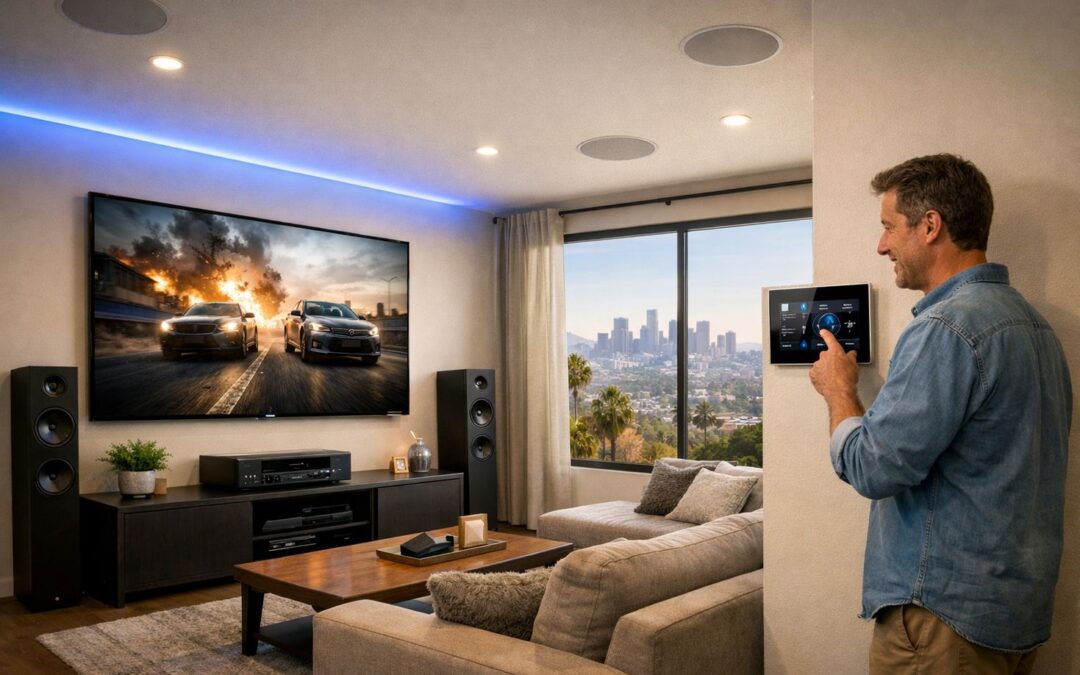
A great home theater setup is more than a large screen and a few speakers. The difference between a basic TV room and a true theater experience comes down to thoughtful planning around the room, sound performance, viewing comfort, and how every component works together. In Los Angeles, that can mean very different solutions for a dedicated theater, a media room, or an open-plan living space where design matters just as much as performance.
The best results start with the fundamentals: room layout, speaker placement, display size and type, acoustics, wiring, networking, and simple control. When these details are considered early, the system feels more immersive, looks cleaner, and performs reliably for movies, sports, gaming, and everyday streaming.
This guide is designed to help you understand the key decisions that shape a successful installation, whether you are upgrading an existing space or planning a new one. We will cover how to think through equipment choices, Dolby Atmos possibilities, control options, and when professional installation makes the biggest difference.
What This Guide Covers
- How to evaluate your room for seating, screen placement, and acoustics
- What to know about speakers, subwoofers, displays, and Dolby Atmos layouts
- Why wiring, networking, and control systems affect long-term usability
- When professional planning and installation are worth it for Los Angeles homes
What Counts as a Modern Home Theater Setup?
A modern home theater setup is more than a TV or projector with a few speakers. It is a coordinated entertainment environment designed so the picture, sound, control, and room all work together. That can range from a well-planned media room to a dedicated cinema space, and many homeowners start by exploring home theater installation services in Los Angeles to understand what fits their space and goals.
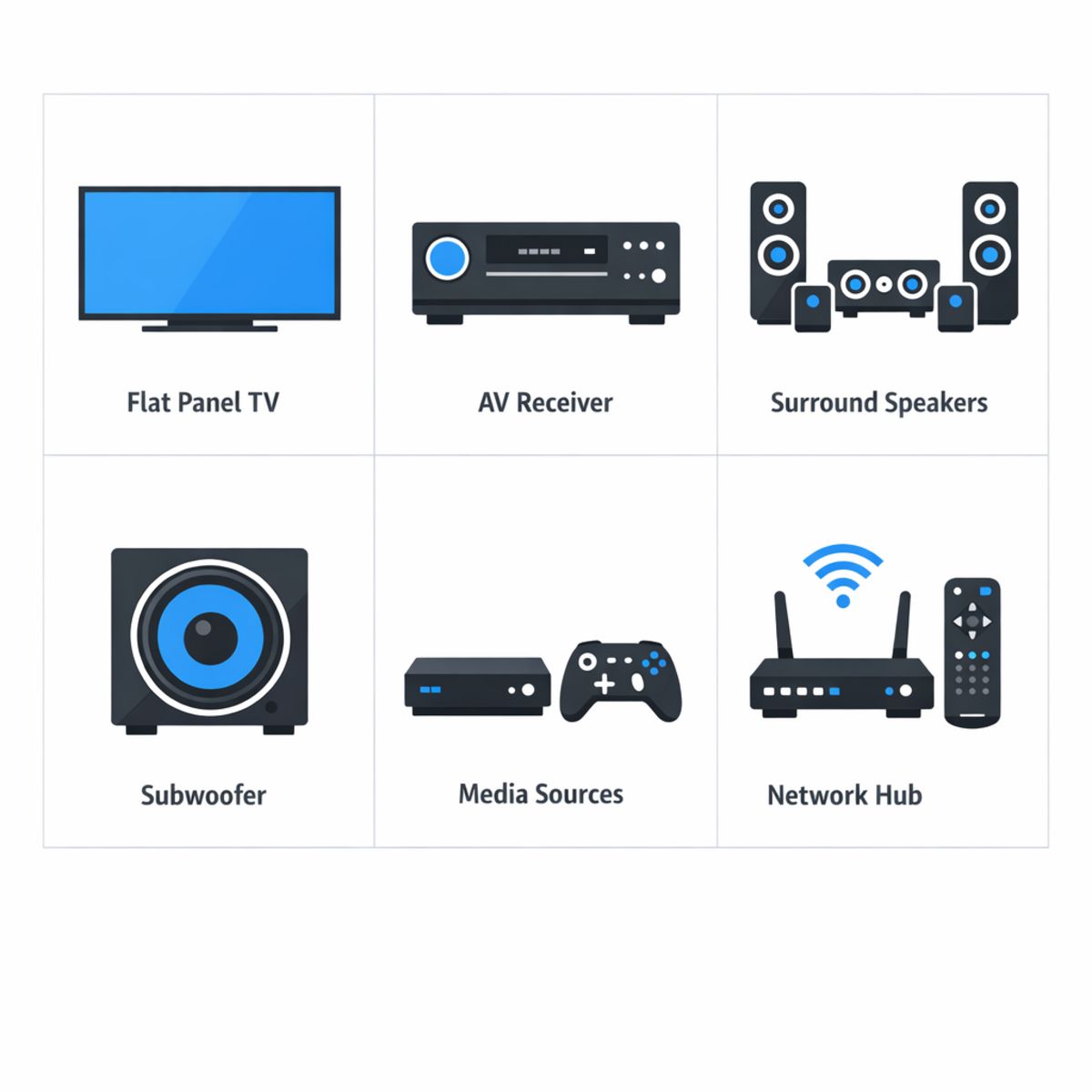
At the core, a complete home theater system usually includes a display or projector, an AV receiver or processor, home theater speakers, a home theater subwoofer, and source devices such as streaming boxes, gaming consoles, or media players. Just as important are the systems behind the scenes, including control and reliable networking. Features like universal remote control solutions for theaters and whole-home WiFi networking for AV systems help everything feel seamless instead of complicated.
Core Components of a Complete System
The display handles the image, while the audio chain powers and processes sound for the speakers and subwoofer. Surround speakers create immersion, and the subwoofer adds impact and depth. Source devices provide content, while control systems simplify operation. Connectivity matters too, because streaming, updates, and smart features depend on a stable network.
Basic Media Room vs. Advanced Home Theater
An entry-level setup may use a single screen and soundbar in a living room. A more advanced home theater adds true surround sound, better speaker placement, hidden wiring, acoustic treatment, lighting scenes, and integrated control. The difference is not just more equipment. It is the level of design and integration that makes the room perform like a complete system.
Why Planning First Leads to Better Performance
Planning the room before choosing equipment is one of the smartest ways to get better results from a media space. In practice, room dimensions, seating distance, ceiling height, and ambient light all shape how a system looks, sounds, and feels day to day. A beautiful display can suffer from glare, and even high-end audio speakers can sound underwhelming if the room creates echo, weak dialogue, or uneven bass.
The Room Shapes the Experience
A planning-first approach helps avoid common homeowner mistakes like placing seats too close to the screen, overlooking sightlines, or ignoring how hard surfaces affect reflections. The room often matters as much as the gear. When layout, speaker placement, and lighting are considered together, the result is better viewing angles, clearer sound, stronger comfort, and a more enjoyable experience for movies, sports, and everyday streaming.
Performance Without Sacrificing Design
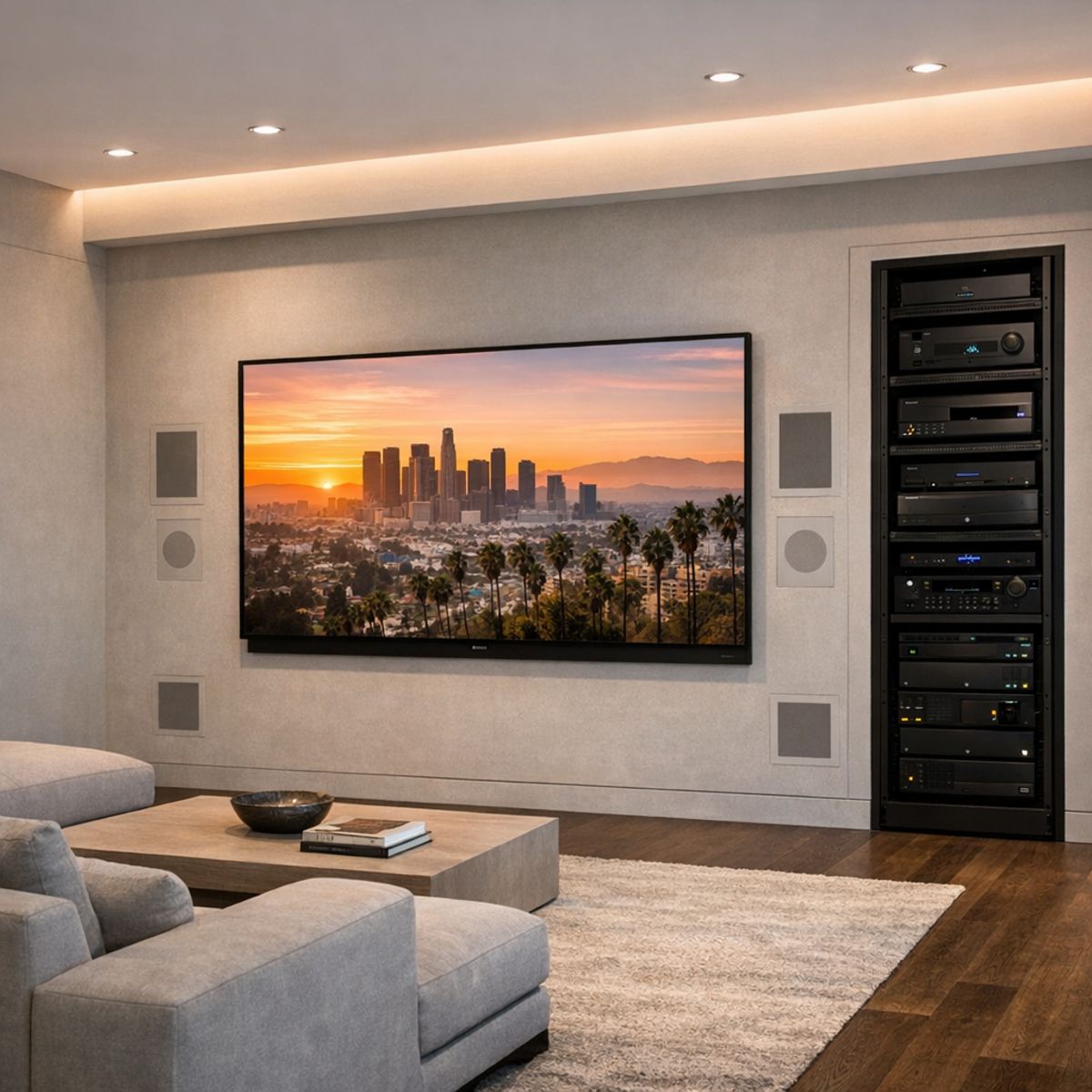
For Los Angeles homeowners who want clean, design-forward spaces, early planning also protects the look of the room. Hidden wiring, proper equipment ventilation, and a path for future upgrades can be built in from the start instead of added later as visible compromises. That makes it easier to integrate premium solutions such as in-wall speakers, concealed racks, and even home automation features for media rooms while keeping the space refined, functional, and ready for long-term value.
How to Plan the Right Home Theater Setup
Planning the right home theater setup is easier when you break it into a few clear decisions. Whether you want a dedicated theater room or a flexible media space, the goal is to match the room, screen, speakers, and infrastructure to how you actually watch and listen. A thoughtful plan also helps you know where professional design, installation, and calibration can make the biggest difference.
Step 1: Start With the Room and Use Case
First, define the room size, ceiling height, seating position, and light conditions. Then decide how the space will be used most: movie nights, sports, gaming, or everyday TV. A dedicated theater allows better speaker placement, darker finishes, and tighter acoustic control. A family room setup usually needs to balance performance with aesthetics and daily convenience. This first step shapes every choice that follows.
Step 2: Match Screen Size to Seating
Choose display size based on where people will sit, not just what fits on the wall. Larger screens create a more immersive experience, but only if the viewing distance feels comfortable. Also consider glare, window placement, and whether a TV or projector makes more sense. Bright rooms often favor TVs, while controlled-light rooms can support larger projected images for a more cinematic result.
Step 3: Build the Right Speaker Layout
Start with a strong front stage: left, center, and right speakers positioned for clear dialogue and balanced imaging. Then decide whether a 5.1, 5.1.2, or 7.1.4 layout fits the room and budget. If you want more immersive overhead effects, a Dolby Atmos home theater system may be worth it, especially in rooms where height speakers can be properly placed. Subwoofer location matters too, because bass response changes dramatically depending on the room. This is often the point where expert tuning becomes valuable.
Step 4: Plan Wiring, Power, and Networking Early
Before equipment is installed, map out speaker wire runs, HDMI paths, equipment location, ventilation, surge protection, and network access. Prewiring now makes future upgrades much easier and keeps the finished room cleaner. Stable connectivity is also essential for streaming, control apps, and connected devices, so plan for reliable WiFi networking for smart theaters. If you want the system to work seamlessly with lighting, shades, and one-touch control, it also helps to review home automation options in Los Angeles during the planning stage.
A smart home theater setup plan should also leave room for control, lighting scenes, and simple daily use. The more systems you want to combine, the more important professional installation becomes for performance, reliability, and a polished final result.
What Professional Home Theater Installation Includes
A true home theater installation involves far more than mounting a display and connecting a few cables. It starts with consultation and system design, where room layout, seating positions, acoustics, lighting, and performance goals are reviewed to shape the right solution. From there, equipment selection is matched to the space, whether the project includes new construction prewire or a clean retrofit in an existing home.
From Design to Final Calibration
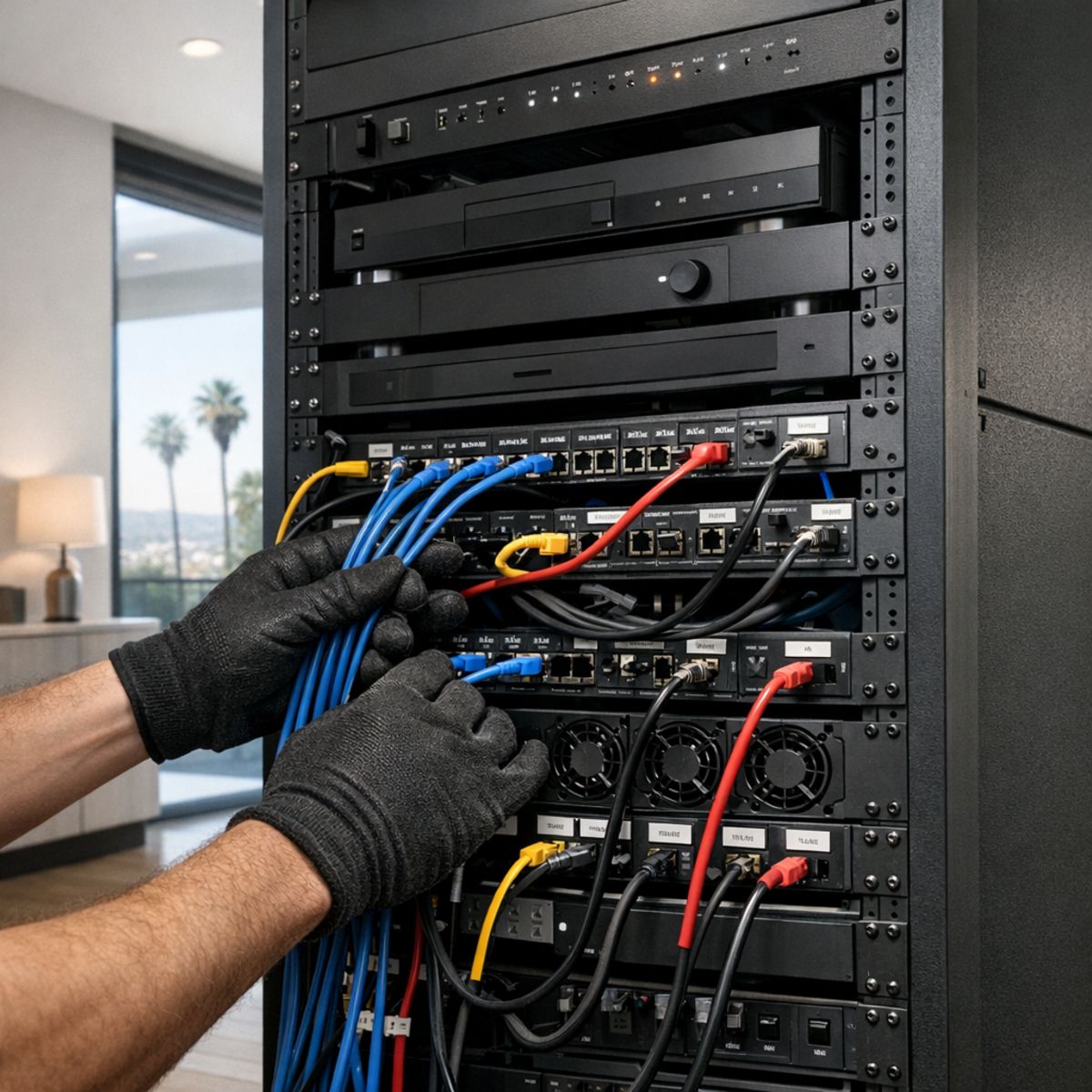
During installation, professionals handle speaker placement, display or projector mounting, rack organization, ventilation planning, cable management, and labeling so the system is reliable and easy to service. Programming follows, tying together sources, surround processing, streaming, and control interfaces. Many projects also coordinate with lighting, motorized shades, and broader smart home automation so the room works as one complete environment. For homeowners seeking professional home theater installation in Los Angeles, that structured process helps avoid guesswork and delivers a more polished result.
Why Calibration Changes the Result
Calibration is where craftsmanship becomes noticeable every day. Small changes in speaker angles, listening levels, crossover settings, and subwoofer tuning can dramatically improve dialogue clarity, bass balance, and surround immersion. Picture calibration also helps optimize brightness, contrast, and color for the room. Just as important, control setup makes the system simple to use, so starting a movie does not require multiple remotes or complicated steps. Expert tuning turns quality equipment into a theater that feels effortless, consistent, and refined.
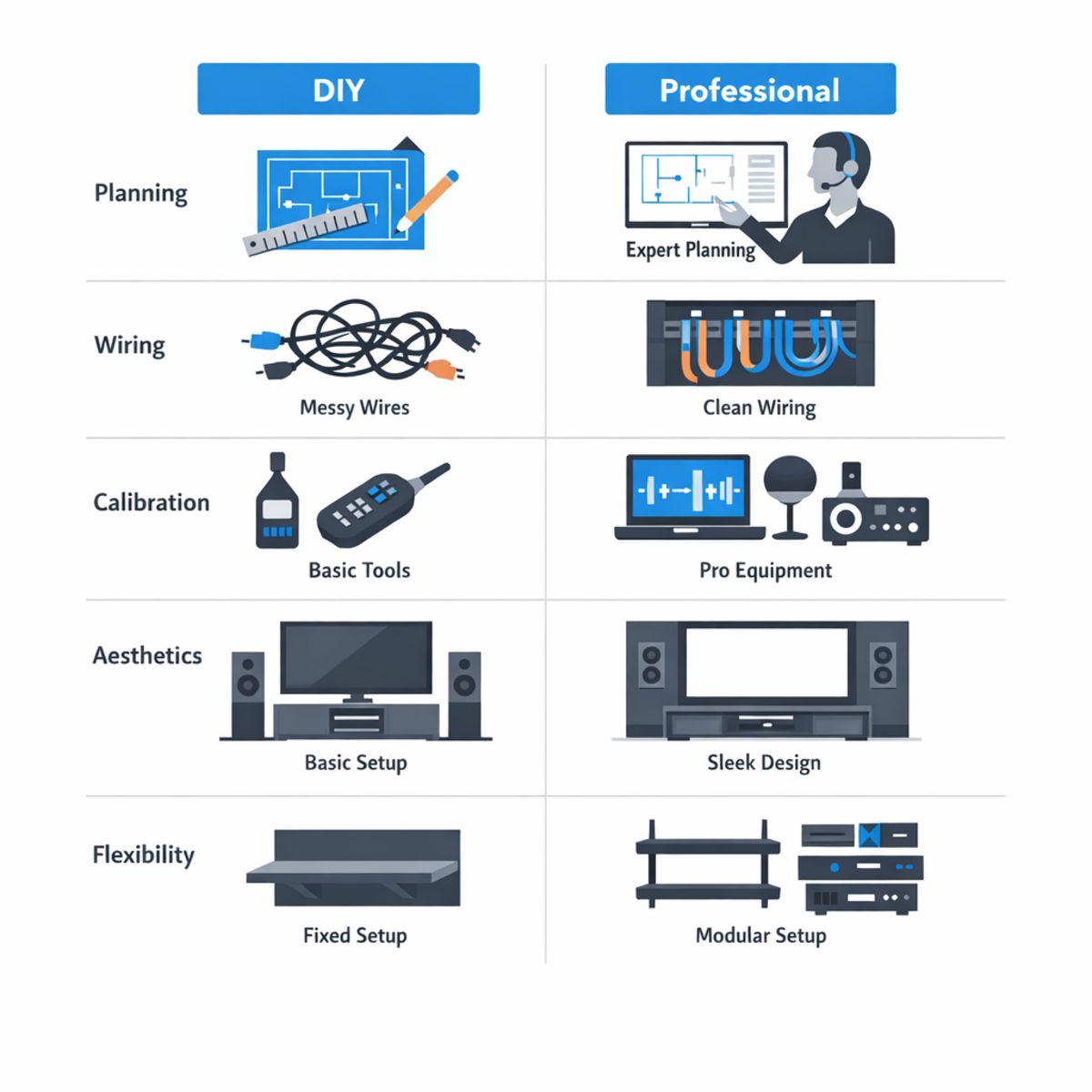
DIY Setup vs. Professional Installation
Both DIY and professional installation can be the right choice, depending on the room, equipment, and your expectations. A DIY setup often works well for a simple media room with a soundbar, a basic receiver, or a straightforward 5.1 speaker layout. If you are comfortable assembling components, running a few visible cables, and troubleshooting settings, doing it yourself can save money and give you more hands-on control.
When DIY Can Work Well
DIY is usually enough for plug-and-play spaces where the gear is easy to place and the room does not need major changes. It suits budget-conscious homeowners who do not mind spending extra time on setup, testing speaker placement, and adjusting picture and sound settings on their own.
When Professional Help Pays Off
Professional installation becomes the smarter choice when the project includes in-wall speakers, Dolby Atmos, hidden wiring, automation, or acoustic challenges. In many Los Angeles homes, architecture and design expectations make clean integration just as important as sound quality. A pro can reduce trial and error, improve calibration, protect aesthetics, and build in flexibility for future upgrades. For more complex home theater installation projects in Encino, expert planning often delivers better long-term performance and a more polished result.
What Affects the Cost of a Home Theater System
Home theater cost can vary significantly from one project to the next because the final budget depends on performance goals, room conditions, and installation scope. Rather than thinking only about equipment, it helps to look at how the entire system is designed to work together in your space.
The Biggest Budget Drivers
- Room size and layout, which affect speaker placement, display size, and acoustic needs
- Display type, whether that means a large flat panel or a projector and screen setup
- Audio system complexity, including the number of channels, speaker quality, and subwoofers
- Acoustic treatment and sound isolation for better clarity and immersion
- Control systems, automation, and ease-of-use features
- Labor, calibration, and programming required for a polished result
Retrofit projects often cost more in labor than prewire installations because wiring paths, wall access, and finish protection can add complexity. In new construction, planning ahead usually creates more flexibility and efficiency.
The best way to approach budget is to start with the experience you want—casual movie nights, reference-level surround sound, or a fully dedicated theater—and then build the system around those goals. That keeps the focus on value, performance, and long-term satisfaction rather than equipment alone.
Smart Features That Elevate the Experience
Today’s best theater spaces do more than deliver great picture and sound. With custom home theater solutions for Los Angeles, the experience becomes easier, faster, and more enjoyable to use every day.
One-Touch Control for Movie Night
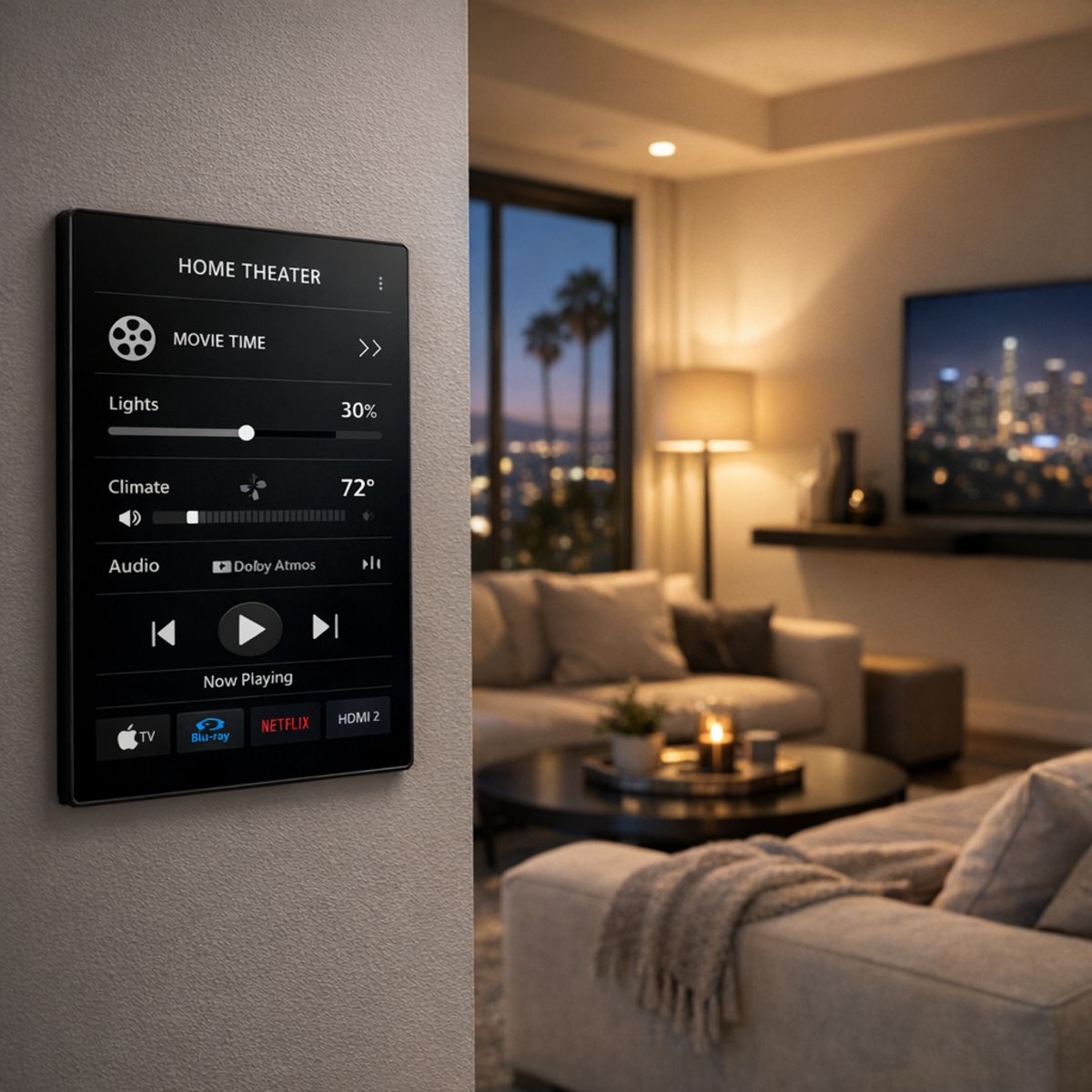
A single tap can lower the shades, dim the lights, power on the display or projector, and set audio to the right level. Universal remotes, touch panels, and smart scenes remove the hassle of juggling multiple devices, while smart home automation for entertainment spaces helps everything work together in a simple, polished way.
Why Networking Still Matters
Strong networking supports smooth streaming, responsive control, and dependable firmware updates for connected components. In some homes, theater integration can also tie into broader smart systems, including lighting, whole-home control, and even security awareness, creating a more connected and convenient environment without taking focus away from the theater itself.
Frequently Asked Questions About Home Theater Setup
What is the ideal room size for a home theater setup?
There is no single ideal room size. Small, medium, and large rooms can all work well when the screen size, seating distance, and speaker layout are matched to the space. The goal is balance, not just square footage.
Do I need a Dolby Atmos home theater system?
Not always. Dolby Atmos can add a more immersive sense of height and movement, which is especially useful in dedicated theater rooms or higher-end media spaces. For simpler rooms, a well-designed 5.1 or 7.1 system may still deliver excellent results.
How many home theater speakers do I need?
That depends on your room and listening goals. A 3.1 setup is a strong starting point for clear dialogue and solid bass, while 5.1 is a common choice for surround sound. Larger or more premium rooms may benefit from 7.1 or Atmos-based layouts with added height speakers.
Where should a home theater subwoofer go?
There is no universal best spot for every room. Subwoofer placement depends on room shape, furniture, wall surfaces, and how bass waves interact in the space. Testing a few positions and calibrating the system usually produces the best result.
Is professional home theater installation worth it?
It can be, especially if you want clean wiring, proper speaker placement, reliable control, and better overall performance. Professional installation is often most valuable for dedicated theaters, surround sound systems, and rooms with multiple components. For simpler setups, it may be more of a convenience than a necessity.
Ready to Build a Better Home Theater?
If you’re planning a new theater or upgrading an existing room, Smart Home LA can help with design, installation, and integrated control support across Los Angeles. Get expert guidance tailored to your space and goals.
Final Thoughts on Creating the Right Setup
The best home theater setup is rarely defined by equipment alone. The most satisfying results come from balancing room design, speaker layout, display selection, infrastructure, and intuitive control so every part of the system works together.
A Great Theater Is More Than Great Gear
When planning a space, it helps to think beyond a simple shopping list and focus on the full experience: how the room looks, how the sound performs, how the system is calibrated, and how easy it is to use every day. Thoughtful integration creates comfort, consistency, and long-term enjoyment.
For Los Angeles homes, that often means designing a solution that fits both the architecture and the lifestyle. With the right planning approach, a home theater can feel polished, immersive, and effortless from the start.